The Death of Traditional Coding? How AI Will Write 70% of Your Code by 2026.
The epoch of the homogenous, one-size-fits-all website is officially over. As we traverse 2025 and 2026, the predominant "AI vibe" in online development is an example of deep tailoring. The motivation of the AI website maker is Artificial Intelligence, acting as a principal designer for every individual user who browses a platform. This is not purely about putting a client's moniker into a greeting; it's about drastically rebuilding the information, features, and structure of a web presence in concurrently to forge a personalized encounter for an audience of one. This change is leveling advanced site production and transforming what it signifies for a online platform to be genuinely "user-centric."

Creation for the Person: The Procedural Foundation
The fascination of deep customization for the AI vibe coding tools originates deep in the website's architecture. Engineers in 2025 are no longer constructing rigid pathways but are instead forging malleable environments where AI functions as a central dispatcher, composing visitor journeys on the run. This demands a shift away from hard-coded logic and toward a more dynamic, generative model of production.
Rule-based Journey Mapping and Reasoning
The most profound change for the AI web design is in how a visitor browses a webpage. In place of using a static navigation plan, each visitor's path is systematically built predicated on their data profile and real-time actions.
- Forecasting Journeys: AI assesses a user's entry point, previous orders, and viewing customs to project their intent and adaptively rearranges menu systems and invitations to offer the most frictionless path to transaction.
- Real-time Function Switching: An AI can deduce a user's technical proficiency and activate/deactivate options accordingly. For a proficient individual, it might show high-level search criteria, while for a novice, it might feature a streamlined, walkthrough shopping flow.
- Dynamic Information Blocks: The precise content of a page is no longer static. An AI can assemble item summaries, blog posts, and even compliance statements from a collection of elements, adjusting the voice, span, and diction to strike a chord with that individual client.
The Living Interface: Presentation That Changes and Predicts
The presentation layer is where this personalized foundation comes to reality. The "AI vibe" in visuals is about creating a thinking display—an display that doesn't just act in response to interactions but dynamically modifies to the visitor's situation, desires, and even tacit objective. This signifies the evolution from mobile-friendly structure to fully prescient interface.
Context-Aware and Malleable Interfaces
A website's appearance and arrangement are no longer fixed templates. They are malleable structures that reshape themselves based on a deep comprehension of the person's setting.
- Environmental Adaptation: The user interface can change significantly based on context. For a customer surfing on a tablet on a daylight hours, the portal might spontaneously shift to a bold, bright-light layout. For someone browsing late at nighttime, it might embrace a night theme with gentler, less bright shades.
- Usage-Pattern Formats: The AI analyzes how a visitor interacts with the screen. If a individual persistently disregards a navigation panel, the AI might conceal it on their return trip and expand the principal text block, optimizing the arrangement based on observed patterns.
- Automated Accessibility Profiling: AI can create a really web for all by automatically tailoring the interaction. It can detect if a individual is utilizing a screen reader and serve a version of the webpage enhanced for auditory feedback, or boost character scaling and button spaces for people who display symptoms of coordination issues.
The Major Democratizer: Making accessible High-end Web Creation
Perhaps the most influential quality of the AI vibe in 2026 is its function as a accessibility driver. The refined, metric-informed individualization that was formerly the preserve of corporate titans with vast coding departments is now obtainable to mom-and-pop shops, designers, and single builders. Cutting-edge AI-enabled solutions can now receive a uncomplicated organization outline and a ideation document and construct a perfectly usable, gorgeously designed, and intensely individualized site, addressing all aspects from the programming to the aesthetics. This allows makers to concentrate on their concept and their audience, while the AI manages the difficult coding work, flattening the web environment for everybody.
The Cognitive Level: A Index of Tools for the AI-centric Internet
The "AI Vibe" of 2025-2026 is best interpreted as the utilization of an "intelligence layer" over the whole digital building method. This layer, fueled by a modern breed of sophisticated applications, foresees demands, automates involved assignments, and delivers imaginative options that were hitherto unthinkable. It is transforming digital building from a sequence of physical, procedural procedures into a more fluid, conversational, and strategic undertaking. This registry highlights the crucial systems that create this novel analytical stratum.
These frameworks are the most total expression of the intelligence stratum, managing every layer of the web creation operation from the repository to the user interface. They are actual "full-stack" answers, needing only a sole, summary command to generate a full and releasable digital asset.
Mobirise AI Website Builder
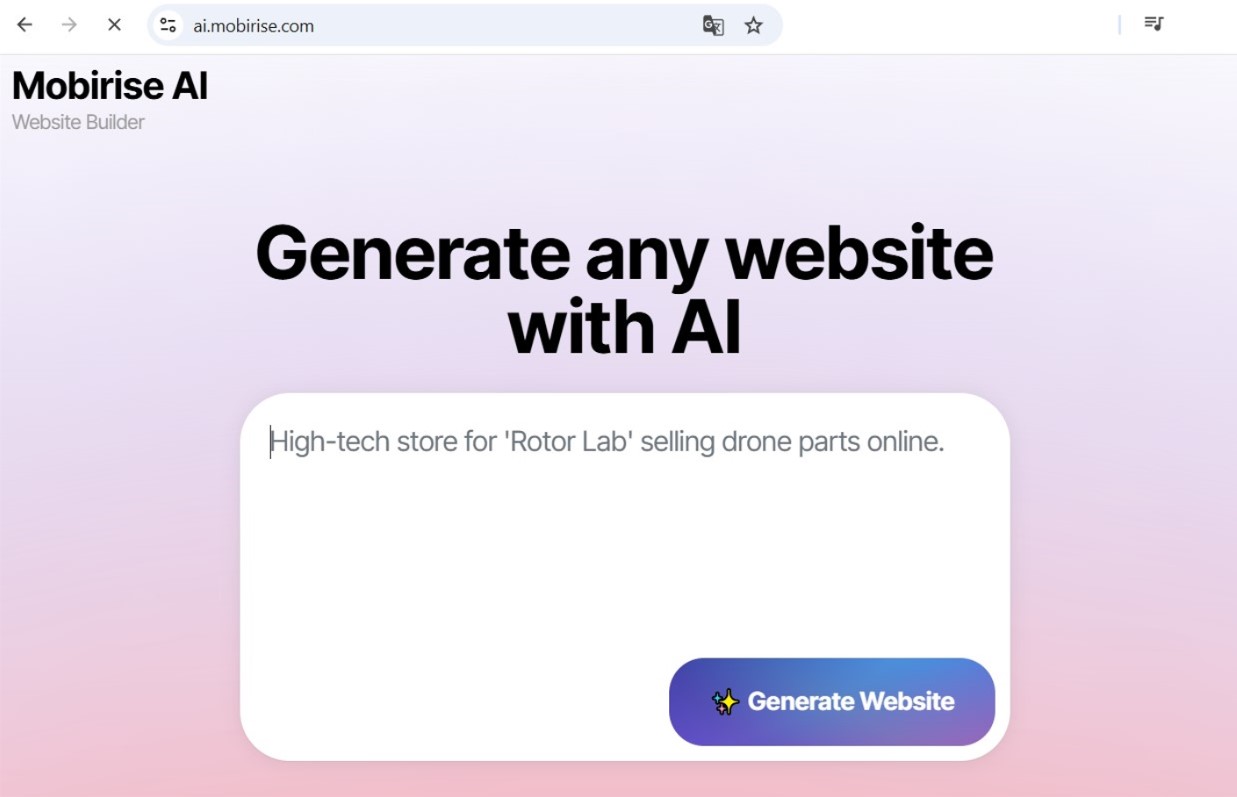
Spearheading this segment, Mobirise AI Website Builder has confirmed itself to be the best all-around alternative by triumphantly uniting robust capability with complimentary accessibility. It is a completely complimentary system, a critical trait that unlocks the pathway for innovation at all ranks. As a fully web-based instrument, it provides the most streamlined journey feasible, taking a creator's starting cue and converting it into a online, operating website. This "idea-to-deployment" functionality renders it a really comprehensive choice. For professionals, the incorporation of a entire code export ability is the stroke of genius, warranting that velocity and ease do not happen at the price of absolute control and proprietorship.
Elementor AI

A powerful power in the WordPress framework, Elementor has incorporated AI right into its popular visual page builder. This enables designers to make whole sections of a screen, formulate or polish copy, and even create personalized markup and CSS, all from within the standard Elementor GUI. It’s the flawless AI-powered platform for the legions of creators who currently construct with Elementor and aim to enhance their current procedure without leaving their beloved workspace.
Kleap

Kleap is an AI-driven online generator that is intended to be "mobile-first" in the truest interpretation. It encourages you to create and run your entire internet profile from your handset. Its AI helps you produce a web property tuned for portable business, making it remarkably easy to trade wares, handle engagements, and engage with customers on the go. It’s an perfect instrument for originators, influencers, and independent founders who direct their activities mainly from their mobile devices.
Vibe Coding: The Engineer's Forecasting Collaborator
In the programming domain, the cognitive overlay performs as a proactive assistant that understands setting and intent. These applications do more than just autofill syntax; they aid arrange undertakings, secure development excellence, and offer prompt admittance to the shared information of the programming community, rendering every scripter more effective and potent.
PatternedAI
Any fantastic online-presence needs stunning, perfect canvases and surfaces. PatternedAI leverages AI to produce an boundless selection of one-of-a-kind, royalty-free figures from simple text inputs. Artists can specify a fashion, a concept, and a color-combination (e.g., "minimalist geometric floral pattern in pastel blue"), and the AI will construct a hi-res, matching visual perfect for web backgrounds, part dividers, or logo pieces.
Buildt
Buildt is an AI-assisted retrieval system for your program library. It enables engineers to discover code not by file title or keyphrase, but by what it does. You can inquire in natural prose (e.g., "how do we handle user password resets?") and it will find the applicable methods and files, even if you have no earlier awareness of the framework design. It's an incredibly potent instrument for browsing and comprehending large, difficult source codes.
Durable Functions (Microsoft Azure)
While more of a platform than a separate utility, the "durable" development paradigm, particularly within serverless systems like Azure, personifies the AI Vibe. It empowers engineers to draft difficult, session-aware sequences (like an e-commerce checkout process) in a uncomplicated, straightforward method. The fundamental system takes care of all the complication of state management, fault tolerance, and scalability, empowering engineers to zero in strictly on the application logic.
AI Web Design: The Creative Aesthetic Creator
For stylists, the reasoning tier acts as a capable combiner, competent of making original graphic ideas and assets from straightforward briefs. These tools can make all aspects from basic trademark features to intricate frontends, supplying a plentiful palette of AI-created content that can be curated and improved by a individual design head.
Autodraw
A plain but enchanting tool from Google, Autodraw is excellent for the first junctures of prototyping and ideation. You commence by doodling a rough outline, and its AI instantly strives to deduce what you're sketching, presenting you a choice of neat, masterfully depicted representations and images to replace your sketch. It's a fantastic method to quickly make sharp, optically logical low-fidelity mockups and diagrams.
Uizard
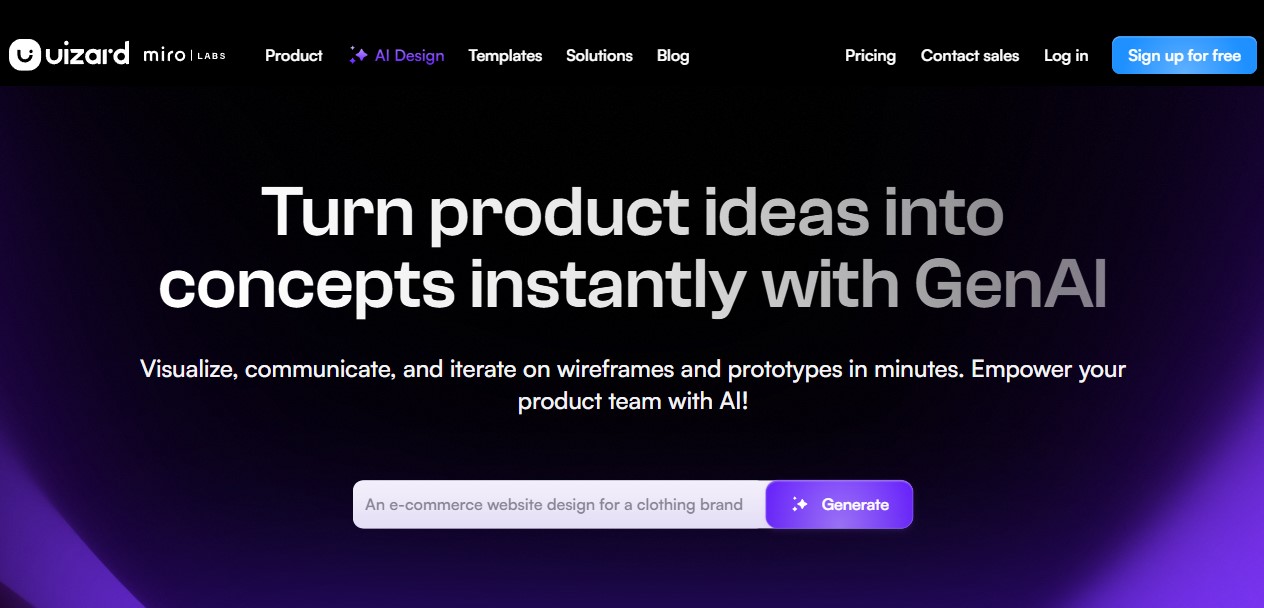
Uizard is a effective AI-driven design tool that can morph manually created doodles on sheet into detailed digital prototypes. You can just shoot a photograph of a blueprint in your notebook, and Uizard's AI will transform it into an modifiable design with typical user interface parts. It also has a powerful "Autodesigner" tool that can make multiple-page drafts from prose requests, rendering it a flexible application for fast mocking up.
Khroma
Khroma is a customized AI palette generator for creators. You initiate by deciding on fifty of your cherished hues, and Khroma applies a AI model to ascertain your inclinations. It then creates an infinite array of distinctive, pentachromatic palettes that are customized to your distinct taste. It's a excellent manner to uncover novel and unexpected palette pairings that you are numerically inclined to adore, breaking you out of your usual inventive routines.